What is the Steel Fixing NVQ Level 2?
As modern construction projects grow in scale, complexity, and regulatory oversight, the demand for verified, competent steel fixers has never been higher. The Steel Fixing NVQ Level 2 serves as the benchmark standard across the United Kingdom for validating the skills of these workers. It shifts the industry away from unverified labor toward standardised, safe, and professional practice.
In today’s blog, we’ll break down everything you need to know about the National Vocational Qualification (NVQ), from the day-to-day role of a steel fixer, to the specific assessment processes and career opportunities that can be unlocked upon completion.
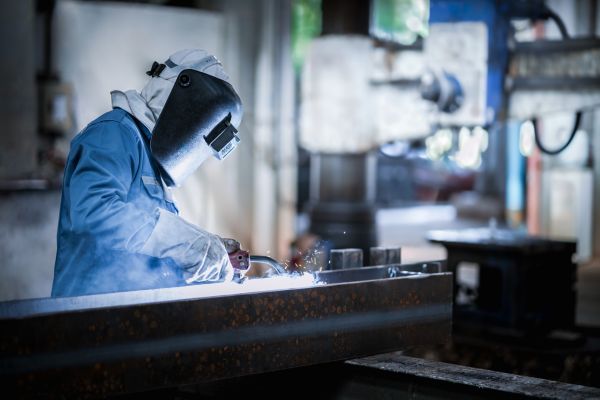
What is a Steel Fixer?
A steel fixer is a specialised tradesperson operating within the civil engineering and construction sectors who positions and secures steel reinforcing bars and mesh, commonly referred to as rebar, within concrete forms.
Concrete as a standalone structural material possesses incredibly high compressive strength. It can withstand substantial downward pressure, but it lacks tensile strength, and is highly susceptible to cracking, bending, or snapping when subjected to pulling, shearing, or twisting forces. Steel fixers remedy this vulnerability; they fabricate an internal skeletal structure of steel that bonds with the poured concrete, resulting in a composite material known as reinforced concrete that can withstand complex engineering loads.
The work of a steel fixer is fundamental to almost all modern structural engineering projects, ranging from the foundations of residential houses to massive infrastructure assets like highway overpasses, skyscrapers, tunnels, dams, and airport runways.
The daily tasks of a steel fixer require a combination of physical endurance, technical literacy, and precise manual dexterity.
What is the Steel Fixing NVQ Level 2?
The Level 2 NVQ, formally recognised within the UK Regulated Qualifications Framework (RQF), is a work-based qualification designed to formally assess and validate the competence of individuals working within this trade.
Unlike traditional academic qualifications that rely on structured classroom instruction, lectures, and written examinations, an NVQ is fundamentally focused on practical execution and real-world application. It serves as an official framework that verifies a worker possesses the exact knowledge, safety awareness, and manual skills required to perform steel fixing duties to recognised industry standards.
Because it’s a work-based qualification, it can’t be achieved in a simulated college workshop alone; it requires the candidate to be actively engaged in real, commercial construction activities where their performance can be scrutinised under authentic site conditions.
By achieving the NVQ Level 2, an individual transitions from being an uncertified or semi-skilled operative to a formally qualified tradesperson. The qualification acts as a benchmark across the UK civil engineering sector, providing a standardised metric by which main contractors, sub-contractors, and clients can instantly verify that a worker is capable of executing complex reinforcement tasks safely, productively, and without the need for constant, direct supervision.
It’s heavily focused on practical outcomes. This ensures that anyone holding the qualification can seamlessly integrate into any construction crew across the country and deliver compliant structural work.
Who Should Take This Qualification?
Level 2 is specifically tailored for individuals who are already operating within the construction and civil engineering sectors and have gained a foundational baseline of practical experience as a steel fixer. It’s not designed for novices who have never stepped onto a construction site; it targets laborers who have spent months or years assisting qualified steel fixers and are ready to formalise their status, as well as experienced, time-served steel fixers who may have been working in the trade for decades but lack the official paperwork to prove their competence.
The qualification is essential for any construction worker whose employment continuity is threatened by the tightening of site access regulations across major commercial projects. In the modern UK construction landscape, principal contractors increasingly refuse site entry to individuals who don’t possess the appropriate credentials, making this NVQ crucial for self-employed sub-contractors who want to maintain their marketability and secure consistent contract work on major projects.
It’s also suitable for foreign workers who have extensive steel fixing experience from overseas but want a recognised UK qualification to validate their skills.
Benefits of the Steel Fixing NVQ Level 2
Achieving the NVQ yields an array of structural advantages for a tradesperson’s career, primarily centered around regulatory compliance, increased earning potential, and expanded employment opportunities.
The most immediate, practical benefit of obtaining this qualification is that it satisfies the educational criteria required to apply for the Skilled Worker Blue CSCS (Construction Skills Certification Scheme) card, which is generally a prerequisite for gaining entry to almost all major commercial and civil engineering sites across the United Kingdom.
Beyond regulatory access, holding an NVQ significantly enhances a worker’s professional credibility and financial leverage within the construction marketplace. Sub-contractors and primary employers are willing to pay premium rates for verified, qualified steel fixers because having an NVQ-certified workforce reduces the employer’s liability, ensures compliance with quality management systems, and minimises the risk of structural defects that lead to costly project delays or structural failures.
The process of undergoing the NVQ assessment often helps workers iron out bad habits, updates their understanding of modern health and safety regulations, and boosts their professional confidence, establishing a solid foundation from which they can eventually pursue supervisory or managerial positions within the industry.

What Skills Will You Formalise?
While the NVQ is primarily an assessment of existing competencies, the process of preparing for and completing the qualification compels candidates to refine, expand, and standardise a wide range of highly technical and practical skills.
In terms of manual and physical skills, the qualification ensures proficiency in a comprehensive suite of material handling, fabrication, and assembly techniques. Candidates refine their competency in the following areas:
- Using manual and mechanical cutting tools, such as hydraulic croppers and angle grinders, safely and precisely to minimise material waste.
- Operating manual bending machines and mechanical bar benders to shape high-yield steel bars to exact angles specified in British and European design standards.
- Executing specialised wire-tying methodologies, including double-strand ties and interlocking knots, to ensure structural rigidity.
- Selecting and installing the correct types of concrete, plastic, or steel spacers and chairs to maintain precise concrete cover zones.
- Rigging, slinging, and guiding prefabricated steel reinforcement cages using site cranes or mechanical telehandlers safely within a busy construction environment.
What Does the Steel Fixing NVQ Level 2 Cover?
The curriculum framework of Level 2 is systematically structured around a series of mandatory units that collectively encompass every facet of a professional steel fixer’s operational responsibilities. These units are designed to cover not only the direct manual tasks associated with assembling steel, but also the broader operational context of working within a complex, high-risk construction environment.
The units ensure that a candidate is fully rounded in occupational safety, logistical coordination, team collaboration, and resource efficiency, creating a worker who contributes positively to the overall productivity of the site.
The core mandatory units typically included within the qualification structure are:
- Conforming to General Health, Safety and Welfare in the Workplace: This unit focuses on maintaining a safe working environment, identifying hazards, reporting risks, and strictly adhering to relevant health and safety legislation.
- Conforming to Productive Working Practices in the Workplace: This unit covers time management, efficient resource utilisation, effective communication with team members, and minimising material wastage on-site.
- Moving, Handling and Storing Resources in the Workplace: This unit trains and assesses candidates on the safe manual and mechanical transport, lifting, and storage of heavy steel reinforcement components, machinery, and ancillary equipment.
- Cutting, Bending and Positioning Reinforcing Steel in the Workplace: This is the core technical unit, focusing directly on the execution of cutting, bending, and assembling rebar grids, cages, beams, and columns according to engineering specifications.
Entry Requirements Explained
The NVQ is highly accessible. This reflects its nature as a practical, work-based qualification rather than an academic degree.
There are no formal academic entry barriers whatsoever; candidates don’t need to possess specific GCSEs, A-Levels, or prior high school diplomas to enroll. The primary, non-negotiable entry requirement is that the candidate must be actively working within the construction industry as a steel fixer, or must have secured a structured work placement or apprenticeship that provides regular, hands-on access to steel fixing activities on a live commercial site.
Because the assessment process relies entirely on gathering real-world evidence from a live workplace, it’s impossible for an unemployed individual or someone working in an unrelated trade to undertake or complete this qualification.
Candidates must have a sufficient command of the English language to understand safety briefings, interpret engineering drawings, and answer oral questions posed by the assessor.
Conclusion: What is the Steel Fixing NVQ Level 2?
The Steel Fixing NVQ is a work-based professional qualification that formally certifies an individual’s competency, practical capability, and safety awareness within the steel reinforcement sector.
It’s an industry-standard mechanism that acts as the primary gateway to securing the Skilled Worker Blue CSCS card, which is essential for gaining entry to major commercial and civil engineering sites across the United Kingdom.
By assessing real-world performance on a live workplace rather than relying on artificial written examinations, the NVQ ensures that every qualified individual possesses the true, hands-on capability required to interpret plans, fabricate rebar cages, and deliver structural integrity to reinforced concrete projects. It’s a vital asset that turns a manual occupation into a standardised, secure, and progressive professional career path.

If you still have any questions regarding the NVQ, then do not hesitate to get in touch.
Phone – 020 3488 4472